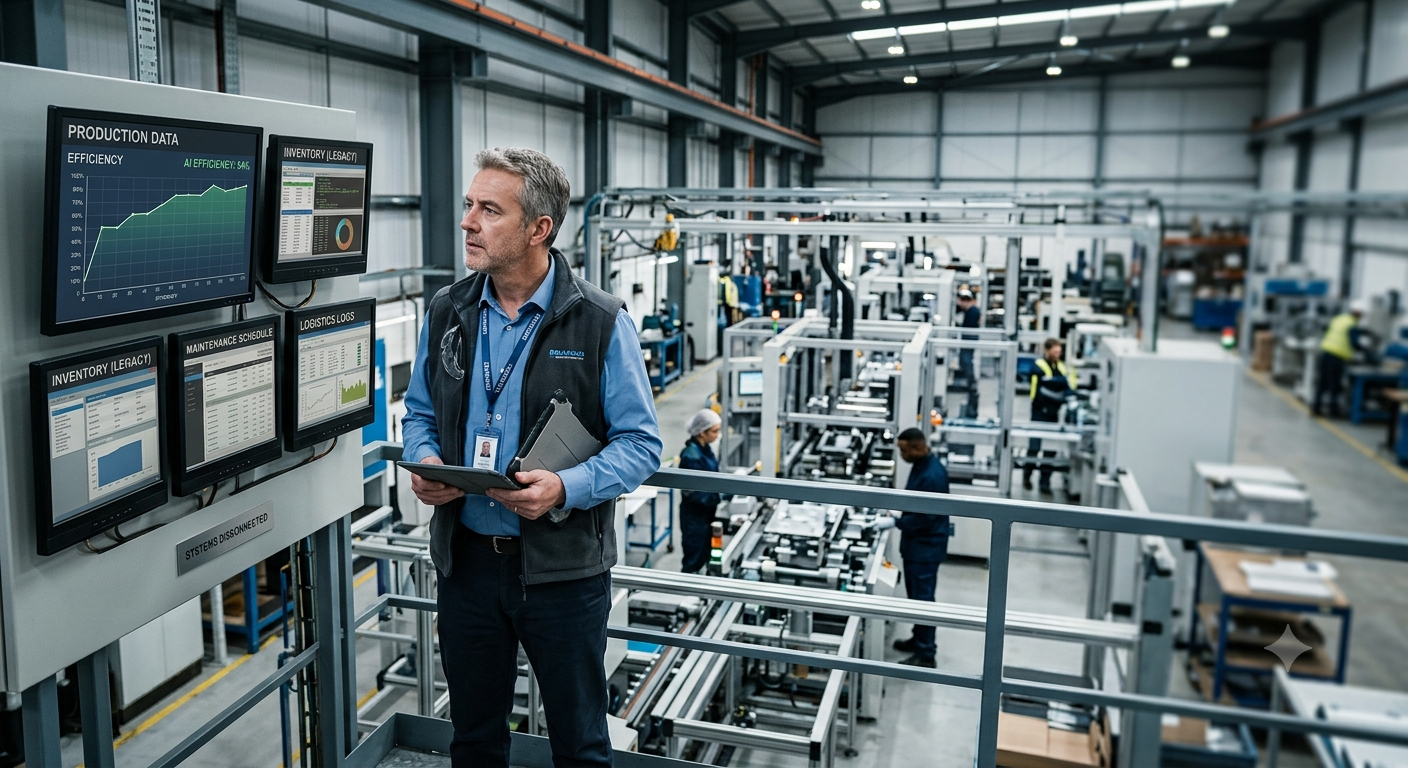
When executives approve a budget for enterprise AI automation, they usually expect the process being automated to become cheaper to run, especially when the business case is built around reducing manual effort, improving efficiency, and lowering operating costs.
In practice, that assumption does not always hold up, because automating a process can introduce a new set of hidden costs that were never part of the original workflow.
The reason becomes much clearer when you look at what drives the cost of an expensive process in the first place and where AI changes that cost structure.
Why AI automation can speed up processes without reducing costs
Many expensive enterprise processes are costly because of the way they are built. Data sits across systems that do not connect well, teams rely on manual checks to bring that data together, and approval steps stay in place because no one fully trusts the numbers coming from a single system. Adding an AI agent can speed up many of these manual tasks, but the underlying problems remain. The agent still needs to pull information from the same disconnected systems, compare the same data, and handle the same gaps that a person dealt with before, only now the work happens faster.
Purchase order approvals are a good example. The approval process may take days because important information such as vendor records, budget codes, and contract terms sits across three or four different systems, which means someone must check each one before approving the purchase. An AI agent can bring that information together and make a recommendation much faster than a person working through the same systems manually. The organization, however, still must maintain all those systems, keep their data accurate, and deal with cases where the information does not match. The process becomes faster, while many of the costs behind the process continue to remain in place.
Where the savings start to disappear
The first year can make an AI automation project look like an easy win, especially when the business case is built around handling more work with the same team. The productivity gains are real, and the ROI numbers often look strong in the first year, but the systems supporting the automation still need to be maintained, and the data issues within the original process continue to exist.
The disconnected systems that required people to reconcile information before AI still need to be connected and interpreted by the agent, while every new automation built on top of them adds another layer that depends on the same underlying data. When a system changes, a field is renamed, or an API is updated, the agent can continue running while producing incorrect results, with no person in the process to catch the issue immediately.
Over time, the savings expected from automation can therefore be absorbed by the cost of maintenance, monitoring, testing, and governance. The business may be doing more work with the same team, but the underlying systems and data problems that made the process expensive are still there, leaving the organization with a faster process and much of the same cost.
The total cost of ownership of the automation project, including maintenance, monitoring, and governance, is what ends up on the board’s desk a year later
Where AI automation delivers real cost savings
Changing the cost of a process starts with improving the data foundation and systems that the process depends on, alongside automating the steps a person used to perform. That means resolving duplicate and conflicting records across the systems involved, creating a governed, AI-ready data foundation that those systems can work from, and then putting an agent on top that can act on reliable data instead of spending its time working around gaps and inconsistencies. The goal is to remove the manual reconciliation work that made the process expensive in the first place, so the automation can deliver savings that continue as the process scales.
The cost of running the automation also needs to be managed from the start. Token usage, inference costs, and GPU capacity can add up quickly as more people use an agent and more workflows depend on it, which makes the underlying architecture an important part of the business case. An agent that is cheaper to run because of better model or infrastructure choices can still become expensive over time if it is built on top of poor data foundations and continues to carry the same reconciliation and maintenance burden.
The biggest savings come when the organization removes that work altogether. That requires improving the data layer underneath the process, resolving the issues that force people and systems to constantly check and reconcile information, and then building automation on top of that stronger foundation. This is what turns AI from a faster way to run an expensive process into a way to reduce the cost of running it.
Where the Data Foundation Made the Difference
In one manufacturing engagement, bringing quality and production data together across plants that had never shared a common view reduced deviation-detection time by 40%. The improvement came from fixing the data gaps that had forced teams to rely on manual checks in the first place, which allowed the process to work from a consistent view of the data. The cost structure changed because the underlying data changed, once the plants had an AI-ready data foundation to work from.
Start with an AI Readiness Assessment
Before implementing enterprise AI automation, it helps to understand where the cost is coming from: the process itself, the underlying data, or the systems supporting it. Parkar’s AI Readiness Assessment takes 5 days and gives you a scored backlog that identifies the biggest gaps and priorities, with no commitment to continue. Visit parkar.in to get started.